
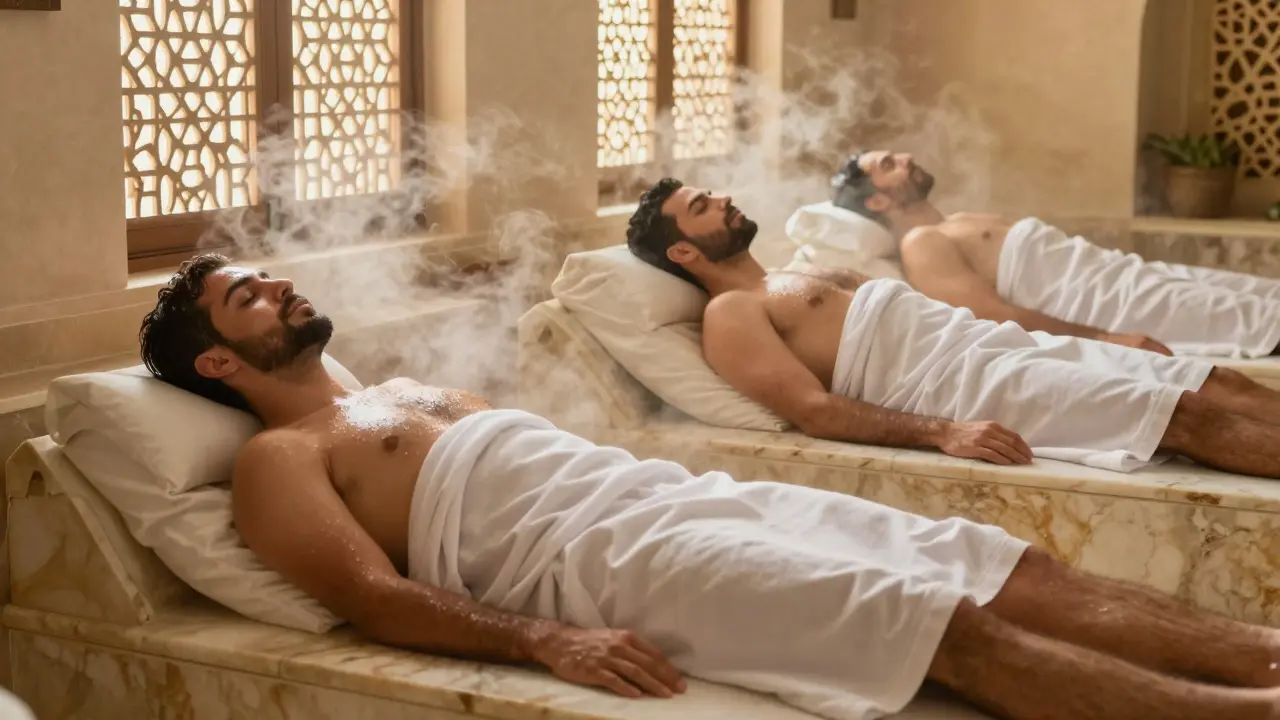
You walk into a steamy, marble-lined room. The air is thick with warmth, the scent of eucalyptus and olive oil hanging softly in the mist. Around you, men are lounging, chatting, or lying back as attendants rub down their backs with rich black soap. You glance down at yourself-what do men wear in a Turkish bath? Shorts? Nothing? A towel? Let’s cut through the confusion.
Quick Takeaways
- Men typically wear just a towel or traditional pestemal in a Turkish bath in Dubai-no swimsuits.
- Most high-end hammams provide your attire; you don’t need to bring anything.
- Nudity is common and culturally accepted, but modesty is respected-no public exposure beyond the steam room.
- Swimsuits are discouraged; they block the benefits of the steam and scrub.
- Public Turkish baths in Dubai are gender-segregated, so you’ll only be around other men.
Direct Answer
In a Turkish bath (or hammam) in Dubai, men wear nothing but a towel or a thin cotton wrap called a pestemal. Some places offer disposable paper shorts, but most traditional hammams expect you to go bare under the towel. Swimsuits are not appropriate and won’t be allowed in the main steam and scrub areas.
What Is a Turkish Bath-and Why Does It Matter in Dubai?
Don’t let the name fool you. The Turkish bath, or hammam, didn’t start in Turkey. It evolved from Roman baths, got refined in the Ottoman Empire, and spread across North Africa and the Middle East. In Dubai, it’s not just a spa-it’s a cultural ritual. People come to detox, relax, and reconnect with centuries-old traditions of cleanliness and community.
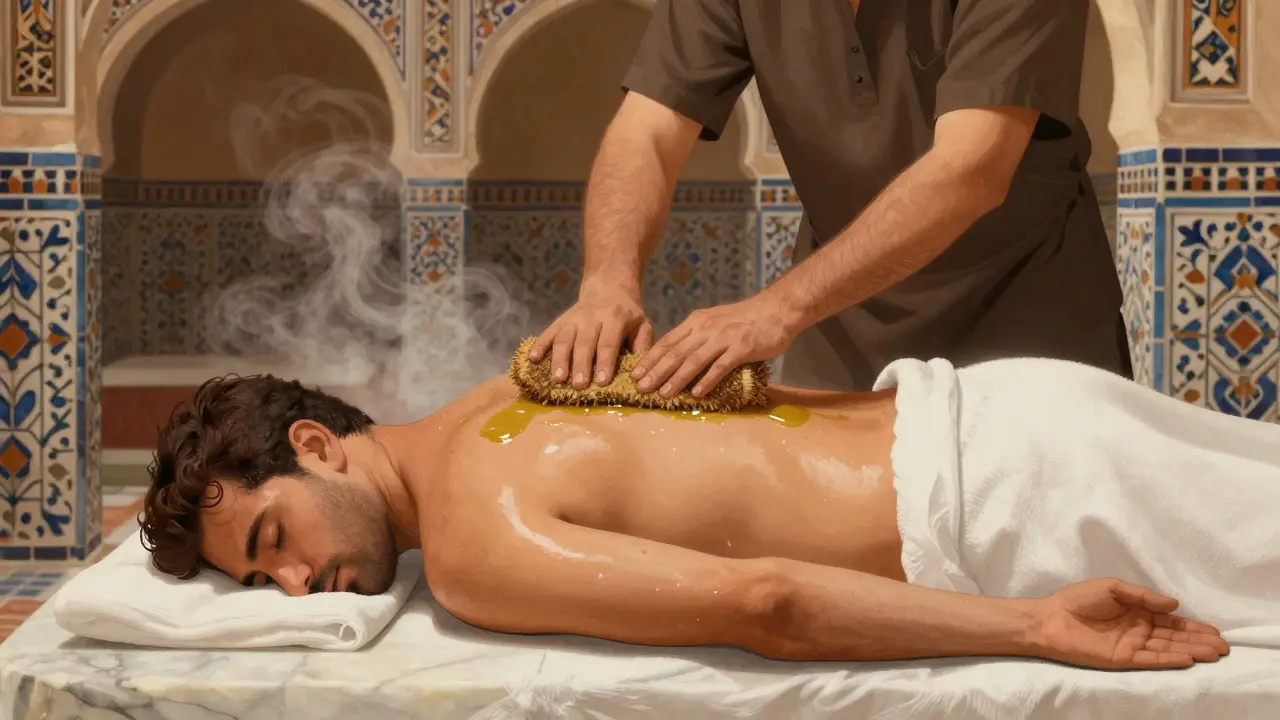
Unlike a Western sauna, a Turkish bath is a full-body experience. You’re steamed, scrubbed with a rough mitt, massaged with olive oil soap, and rinsed with warm water-all in a slow, meditative rhythm. The heat opens your pores. The scrub removes dead skin. The oil nourishes your body. And yes, all of this works better when you’re not wearing a swimsuit.
Why You Shouldn’t Wear a Swimsuit
Imagine trying to scrub your back with a rough loofah while wearing neoprene. It doesn’t work. Swimsuits are designed to repel water, not absorb steam. They trap heat unevenly, block the scrub from reaching your skin, and prevent oils from soaking in. Most hammams in Dubai will ask you to remove your swimsuit before entering the hot rooms.
Plus, it’s not just about function-it’s about culture. In traditional hammams, nudity isn’t sexualized. It’s natural. Men sit side by side, sharing stories, laughing, and letting go of stress. Wearing a swimsuit here feels like showing up to a yoga class in full jeans. It’s not wrong-it’s just out of place.
What Do Men Actually Wear?
You have two options, and both are simple:
- A pestemal-a lightweight, absorbent cotton wrap, usually 100x170 cm. It’s tied at the waist and lets steam flow freely. Most hammams give you one when you arrive. It’s soft, quick-drying, and traditional.
- A towel-if they don’t offer a pestemal, a standard bath towel works. Wrap it securely around your waist, and leave your upper body bare. You’ll be fine.
Some budget hammams offer disposable paper shorts. They’re okay for a quick visit, but they don’t hold up well under steam and can tear. For the full experience, go with the pestemal.
Where to Go in Dubai
Dubai has dozens of hammams, from luxury resorts to neighborhood gems. Here are the top spots:
- Al Bastakiya Hammam (Bur Dubai)-a restored 19th-century house with authentic Ottoman-style steam rooms. No frills, just tradition.
- The Ritz-Carlton Spa (Jumeirah Beach)-a high-end experience with heated marble slabs and aromatherapy oils. Perfect if you want pampering.
- Al Faya Lodge (desert retreat)-a hidden gem with private hammam suites and starlit relaxation rooms.
- Spa at Address Downtown-popular with locals and expats. Offers male-only sessions after 4 PM.
All of these places provide your pestemal or towel. No need to pack anything. Just show up.
What to Expect During Your Session
Here’s how it usually goes:
- You arrive and are led to a changing room. You’re given a pestemal and slippers.
- You enter the warm room-around 40°C. Sit or lie down for 10-15 minutes. Breathe. Let your body loosen up.
- You move to the hot room (50-55°C). This is where the real steam kicks in. You’ll sweat. A lot.
- An attendant calls your name. You lie on a warm marble slab. They pour warm water over you, then scrub you from head to toe with a rough glove. It feels intense-but in a good way.
- They massage you with black soap and olive oil. You’re rinsed off with warm water.
- You’re handed a fresh pestemal, a glass of mint tea, and told to rest. You’ll feel lighter than you have in years.
Most sessions last 60-90 minutes. Plan for at least two hours total-arrive early, relax afterward.
Pricing and Booking
Prices vary by location:
- Traditional hammams (like Al Bastakiya): AED 120-180
- Luxury resorts (Ritz, Address): AED 350-650
- Hotel spas (for guests only): Often included in room packages
Book online or call ahead. Many places offer male-only hours in the late afternoon or evening. Weekends fill up fast. Don’t wait until the last minute.
Safety and Etiquette
Here’s what you need to know to avoid awkward moments:
- Don’t bring your phone into the steam room. It’s disrespectful-and it’ll fog up.
- Keep your voice low. Hammams are for quiet reflection, not loud chatter.
- Don’t stare. Everyone is relaxed. No one is judging.
- If you have sensitive skin or health issues (low blood pressure, heart conditions), tell the attendant before the scrub.
- Hydrate before and after. You’ll lose fluids fast in the heat.
- Wait 15 minutes after the session before jumping into cold water or a pool. Let your body adjust.
Comparison: Turkish Bath vs. Moroccan Bath in Dubai
| Feature | Turkish Bath | Moroccan Bath |
|---|---|---|
| Atmosphere | Marble, steam, quiet, traditional | Colorful tiles, aromatic oils, slightly more social |
| Attire | Pestemal or towel only | Pestemal or towel only |
| Scrub | Coarse mitt, full-body | Same, but often with rhassoul clay |
| Oil | Primarily olive oil | Argan oil, sometimes with rose or mint |
| Temperature | Higher heat (50-55°C) | Slightly cooler (45-50°C) |
| Best For | Deep detox, tradition, relaxation | Skin renewal, scent experience, social vibe |
Both are great. If you want authenticity and heat, go Turkish. If you love scent and color, try Moroccan. But the dress code? Identical.
Frequently Asked Questions
Do I have to be naked in a Turkish bath?
Yes, in the steam and scrub areas, you’ll be bare under your towel. It’s not about exposure-it’s about effectiveness. The scrub and steam work best on bare skin. The space is male-only and private, so no one is uncomfortable. Think of it like a locker room after a gym session.
Can I wear swim trunks if I’m shy?
Technically, some places might let you, but they’ll discourage it. The whole point of a Turkish bath is to let your skin breathe. A swimsuit blocks the scrub, traps sweat, and reduces the benefits. If you’re uncomfortable, start with a private session or choose a resort that offers a curtain for changing. Most men find they relax quickly once they’re in the steam.
Is it okay to go alone?
Absolutely. Many men go solo. It’s a personal ritual. You’ll likely sit quietly, read a magazine, or just close your eyes. The attendants are trained to respect your space. Some even say going alone is the best way to truly unwind.
How often should I go?
Once a month is ideal for most people. It helps with skin renewal, circulation, and stress relief. If you’re in Dubai’s heat and humidity, every two weeks can feel amazing. Just don’t go back-to-back days-your skin needs time to recover.
Are Turkish baths only for men in Dubai?
No-many hammams have separate hours for men and women. Some offer mixed sessions, but those are rare and usually private. In Dubai, most public hammams are single-gender. You’ll find men-only sessions in the afternoon and evening, and women-only in the morning.
Final Thought
What you wear in a Turkish bath isn’t about fashion. It’s about trust. Trusting the process. Trusting the space. Trusting that letting go-of clothes, of stress, of control-is part of the healing. You don’t need to be brave. Just show up. The rest will take care of itself.




February 15, 2026 AT 19:46
Let’s break this down like a KPI dashboard: the hammam experience is essentially a high-touch, low-friction thermal detox protocol with zero swimwear ROI.
Swimsuits act as thermal insulators + moisture barriers - they sabotage the core physiological benefits (vasodilation, dermal exfoliation, transdermal absorption).
Also, fabric fibers trap sweat → clog pores → defeat the entire purpose of the scrub. This isn’t a pool party. It’s a biophysical reset.
Emoji: 🧖♂️🔥🧼