

You’ve booked your lymphatic drainage massage. You’re relaxed, maybe even a little sleepy. But then-how do you know it’s actually working? It’s not like you can see your lymph moving. No glowing arrows, no before-and-after photos. Just a quiet, subtle shift inside your body. And that’s okay. The signs aren’t loud. They’re quiet. But they’re real.
What You’ll Feel (and Not Feel)
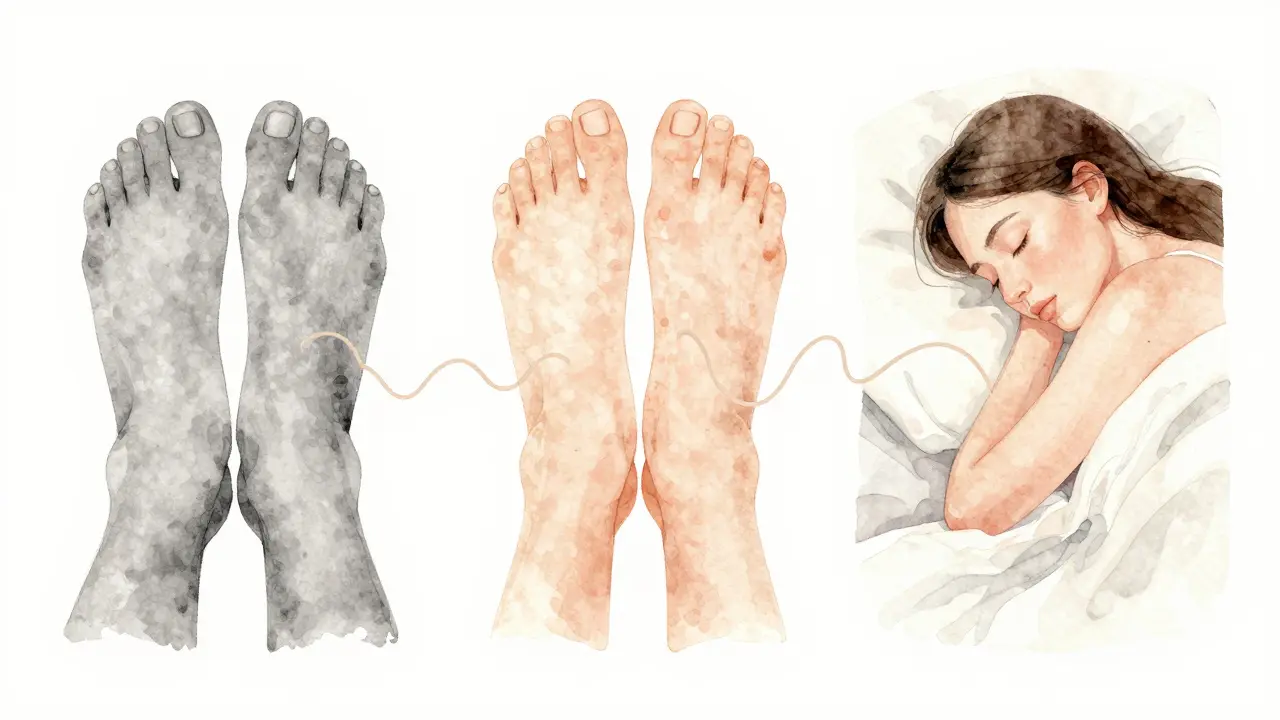
Right after your session, you might feel oddly light. Like you’ve lost a few pounds overnight-not because you lost fat, but because fluid that was stuck is finally moving. Your skin might feel softer, less puffy, especially around your eyes, jawline, or ankles. That’s not magic. That’s your lymphatic system clearing out the slow-moving fluid it’s been struggling with.
Some people report a sudden urge to pee within 30 minutes. That’s normal. Your kidneys are helping out, flushing out the extra fluid your lymphatic system just released. If you didn’t feel that, don’t panic. Not everyone does. But if you feel heavier, bloated, or worse after the massage? That’s a red flag. You might have had too much pressure, or the therapist didn’t understand the rhythm of lymph flow.
Lymphatic drainage isn’t about deep tissue pain. It’s about gentle, rhythmic strokes-like a feather brushing over skin. If your therapist is digging in like they’re massaging a tight shoulder, they’re not doing lymphatic drainage. They’re doing a regular massage. And that won’t move lymph.
How Lymphatic Drainage Actually Works
Your lymphatic system is your body’s cleanup crew. It’s a network of vessels and nodes that collect waste, toxins, excess fluid, and dead cells. Unlike your blood, which gets pushed around by your heart, lymph has no pump. It moves when you move-through muscle contractions, breathing, and yes, gentle massage.
When you’re sluggish, stressed, or sitting too long (hello, desk job), lymph gets sticky. Fluid pools. Swelling happens. That’s when lymphatic drainage helps. The massage uses light, circular motions to stimulate those tiny vessels just under the skin. Think of it like nudging a slow-moving river back into flow.
It doesn’t “detox” you like a juice cleanse. It doesn’t burn fat. But it does help your body do what it’s already designed to do-clear out the gunk.
Signs It’s Working: The Real Indicators
Here’s what to look for over the next 24 to 72 hours:
- Your swelling goes down. If your ankles, hands, or face felt puffy before, they should feel noticeably less swollen after a few sessions. This is the most reliable sign.
- Your skin looks smoother. No more dimples or tightness. Skin that felt stiff or dull becomes softer, more elastic. That’s fluid leaving the tissues.
- You sleep better. Lymphatic buildup can cause low-grade inflammation, which messes with sleep. After a few sessions, you might notice you fall asleep faster or wake up feeling more rested.
- You’re less achy. Chronic stiffness in your neck, shoulders, or legs? Lymphatic drainage helps reduce inflammation, which eases those dull, persistent aches.
- You feel mentally clearer. It sounds strange, but many people report less brain fog. When toxins are cleared from tissues, your nervous system functions better.
These aren’t instant miracles. One session might give you a small lift. But if you’ve had three to five sessions over two weeks and you still feel the same? It’s time to reassess.
What Doesn’t Work (And Why)
Some people expect dramatic results after one session. They want to lose weight. They want their cellulite to vanish. They want to cure chronic illness. Lymphatic drainage doesn’t do those things.
It won’t make you lose weight. It won’t eliminate cellulite (that’s fat trapped under skin, not fluid). It won’t cure autoimmune diseases. But it can support your body’s natural healing process-if you’re consistent.
Also, don’t confuse it with compression boots or vibrating mats. Those machines don’t replicate the precise, manual technique of trained therapists. They might feel good, but they don’t stimulate lymphatic flow the same way.

What to Expect During a Session in Dubai
In Dubai, you’ll find lymphatic drainage offered in luxury spas, physiotherapy clinics, and wellness centers. Most sessions last 60 to 90 minutes. You’ll lie on a table, fully clothed or in a gown, while the therapist uses slow, sweeping motions-starting from your collarbone, moving down your arms, then your torso, and finally your legs.
The pressure is feather-light. You might feel a tingling or warmth, but never pain. Some therapists use oils or lotions with calming scents like lavender or citrus. The room is quiet. Lights are dim. It’s designed to calm your nervous system as much as your lymphatic system.
Afterward, you’ll be told to drink water-lots of it. This helps your kidneys flush out the fluid being released. You might feel tired. That’s normal. Your body is doing cleanup work.
How to Find a Good Therapist in Dubai
Not every masseuse knows lymphatic drainage. Look for someone with specific training:
- Check if they’re certified in Manual Lymphatic Drainage (MLD)-preferably by the Vodder or Casley-Smith method.
- A good therapist will ask about your medical history. If you have cancer, heart failure, or an active infection, they should know not to proceed.
- Ask if they’ve worked with post-surgical patients (like after liposuction or breast surgery). That’s a good sign they know what they’re doing.
- Read reviews that mention results, not just “relaxing.” Look for phrases like “my face stopped swelling” or “my legs felt lighter.”
Top spots in Dubai with trained therapists include Al Maha Spa at Jumeirah Al Naseem, Body Balance Clinic in DIFC, and Wellness Hub in Dubai Marina. But don’t just go by the name. Ask about training.
Cost and Booking
In Dubai, a 60-minute lymphatic drainage session typically costs between AED 350 and AED 650. Longer sessions or packages (like 5 sessions) can bring the price down to AED 280-320 per session.
Some physiotherapy clinics offer it as part of post-surgery recovery plans. If you’ve had cosmetic surgery, check with your surgeon-they might have a recommended provider.
Book ahead. Good therapists are in demand. Most clinics let you book online, but don’t be afraid to call and ask about their training. That’s your filter.
When to Skip It
Lymphatic drainage is safe for most people-but not everyone.
- Avoid if you have: Active infection (like a fever), blood clots, untreated heart failure, or kidney disease.
- Be cautious if you have: Cancer (especially if you’re undergoing treatment). Always get clearance from your oncologist.
- Don’t do it right after a meal. Wait at least 2 hours.
- Don’t do it if you’re dehydrated. Drink water the day before.
Lymphatic Drainage vs. Deep Tissue Massage
| Feature | Lymphatic Drainage | Deep Tissue Massage |
|---|---|---|
| Pressure | Feather-light, barely touching skin | Deep, firm, sometimes painful |
| Goal | Move fluid, reduce swelling, support immunity | Release muscle tension, break up knots |
| Best for | Puffy face, swollen ankles, post-surgery, chronic inflammation | Tight shoulders, sore back, athletes, chronic muscle pain |
| Duration of effect | 24-72 hours (cumulative with repeated sessions) | Hours to a few days |
| Post-session feeling | Light, calm, sometimes tired | Sore, relaxed, sometimes bruised |
Frequently Asked Questions
How many sessions do I need to see results?
Most people notice subtle changes after one session-like less puffiness around the eyes. But real, lasting improvement usually takes 3 to 5 sessions over 2 weeks. For chronic swelling or post-surgery recovery, 8 to 12 sessions spaced weekly are common. Consistency matters more than intensity.
Can I do lymphatic drainage at home?
Yes-but with limits. You can use gentle, upward strokes on your face and neck with a jade roller or your fingertips. But you can’t replicate the full-body technique a trained therapist uses. Home tools help maintain results, not fix deep fluid buildup. Don’t expect miracles from a $20 gadget.
Is lymphatic drainage safe after cosmetic surgery?
Yes, and it’s often recommended. After procedures like liposuction, tummy tucks, or breast augmentation, lymphatic drainage helps reduce swelling, prevent scar tissue, and speed healing. But wait at least 7-10 days post-op, and only work with a therapist experienced in post-surgical care. Always check with your surgeon first.
Why do I feel tired after a session?
Your body is working hard to process the fluid being released. It’s like cleaning out a clogged drain-you didn’t just move water, you stirred up dirt. That takes energy. Rest, drink water, and avoid caffeine or alcohol for the next 24 hours. You’ll feel more energized the next day.
Can lymphatic drainage help with acne or skin issues?
It can help indirectly. When fluid builds up under the skin, it can trap toxins and bacteria, leading to breakouts. By improving lymph flow, especially around the face and jawline, you reduce inflammation and support clearer skin. But it’s not a replacement for skincare or medical treatment for hormonal acne.
Ready to Feel Lighter?
If you’ve been feeling puffy, sluggish, or just “off” without knowing why, lymphatic drainage might be the quiet fix you’ve been overlooking. It’s not flashy. It doesn’t promise instant results. But for people who’ve tried everything else-detox teas, intense workouts, expensive creams-it’s often the one thing that finally makes a difference.
Start with one session. Pay attention to how you feel over the next few days. If your face looks less swollen, your legs feel lighter, your sleep improves-you’ve got your answer. And if not? You’ve still given your body a gentle gift. Sometimes, that’s enough.







January 10, 2026 AT 02:24
I’ve had three sessions now, and honestly? My face doesn’t look like I’ve been crying for three days straight anymore. The puffiness under my eyes? Gone. Not magically, but slowly-like a tide pulling back. I also started sleeping deeper, and I didn’t even realize how much I was waking up tired until it stopped.
Also, I cried during my second session. Not because it hurt-because it felt like my body finally got to exhale. Weird, right? But true.
Drink water after. Always. I forgot once. Felt like I’d been hit by a truck the next day. Lesson learned.