
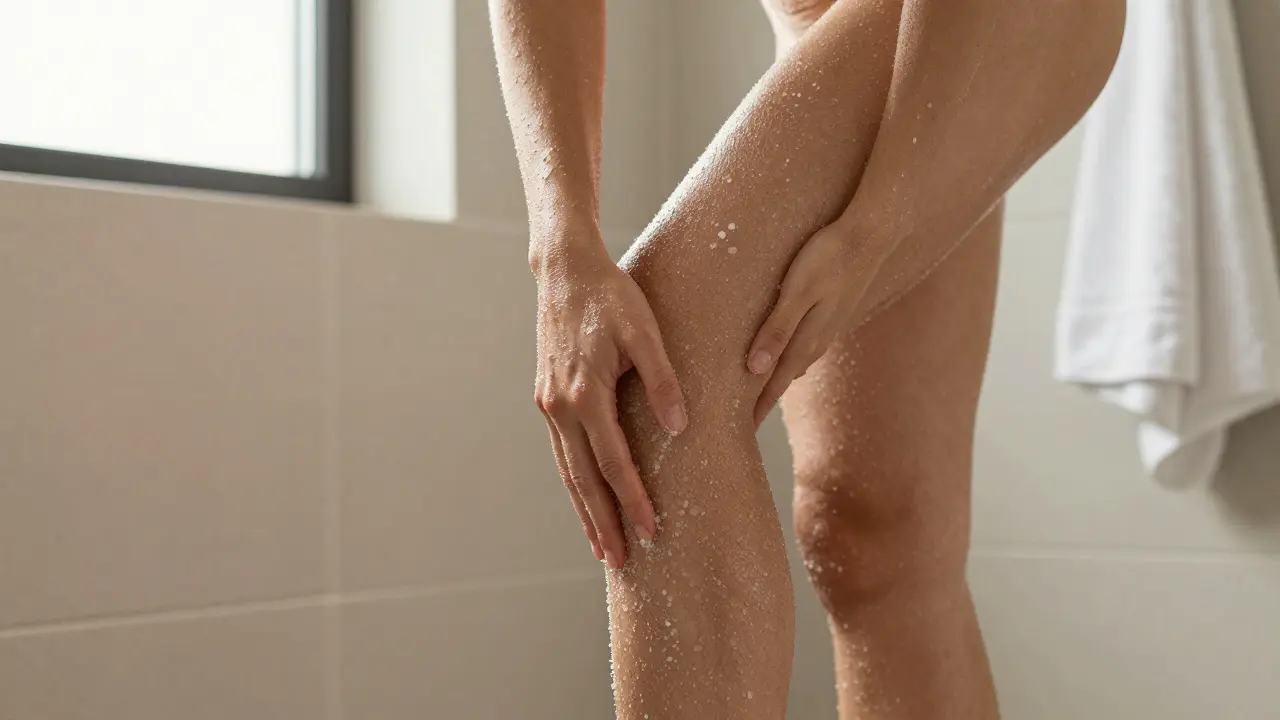
You’ve bought that fancy salt scrub, maybe even splurged on a coconut-oil-infused one. You’ve got it sitting in the shower, ready to go. But here’s the question that’s been nagging at you: do you scrub before or after bathing? It seems simple, but get it wrong, and you’re wasting time, irritating your skin, or worse-missing out on the real benefits.
Let’s cut through the noise. The answer isn’t "it depends"-it’s clear. You scrub before bathing. And here’s why that one detail changes everything for your skin.
The Science Behind Scrubbing
Your skin is covered in dead cells, sweat, oils, and whatever else the day threw at it-dirt, pollution, sunscreen, makeup. A body scrub works by physically sloughing off those dead cells. But if you scrub after you’ve already soaked in hot water, you’re doing it backward.
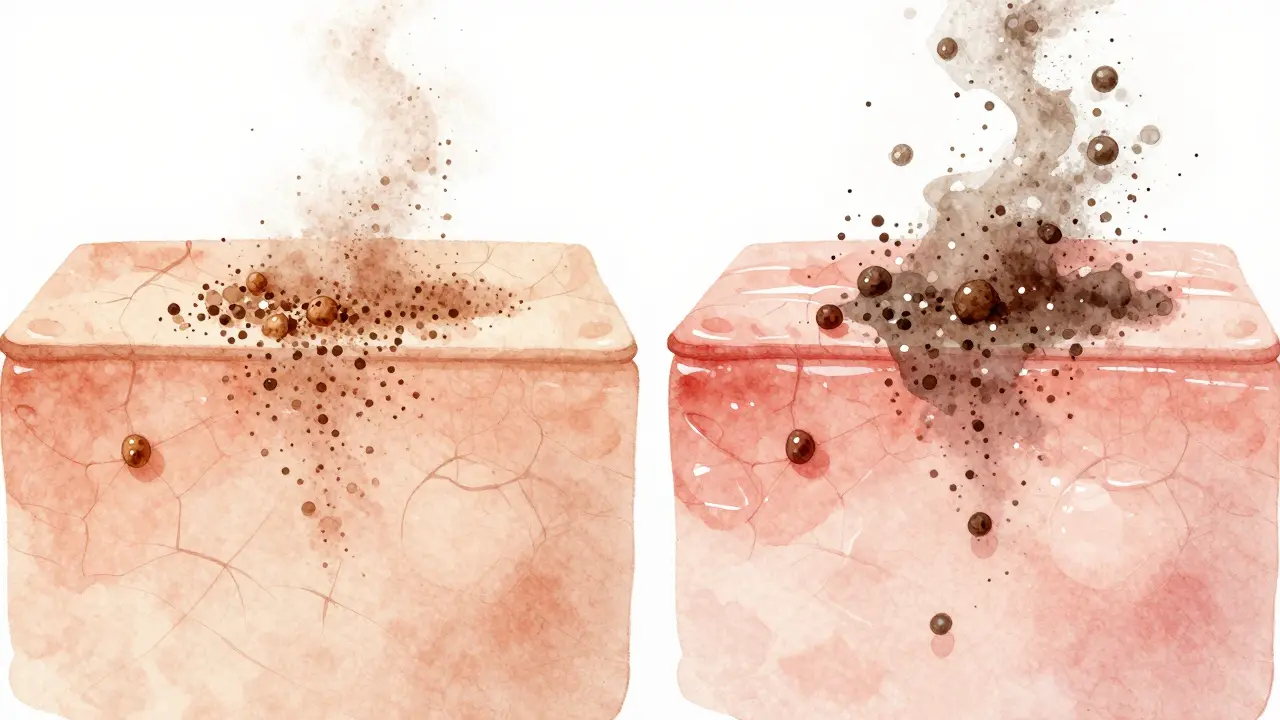
When you bathe first, your skin swells. Pores open. Dead skin cells soften and swell up like little sponges. That makes them harder to remove. You’re scrubbing against resistance. It’s like trying to sweep dust off a wet floor-it just sticks.
But if you scrub before you get in the shower, your skin is dry and the dead cells are still crisp and ready to come off. The scrub’s granules grab them easily. You’re not fighting your skin-you’re helping it.
Why Scrubbing Before Bathing Works Better
Think of your skin like a sidewalk. If you sweep it when it’s dry, the leaves and dust fly away. If you sweep it after it rains? You’re just smearing mud around. Same thing here.
Scrubbing before bathing gives you:
- Deeper exfoliation-dead skin comes off cleanly, not stuck in softened layers
- Better product absorption-after scrubbing, your skin is clean and ready to soak up moisturizers, oils, or serums
- Less irritation-you’re not rubbing harsh particles over wet, sensitive skin
- More efficient use of product-you use less scrub because it works better
There’s also a psychological win: stepping out of the shower after scrubbing feels like a reset. Your skin is smooth, your pores are clear, and you’re not rinsing off scrub particles down the drain-you’re rinsing off the results.
What Happens If You Scrub After Bathing?
You’re not doing permanent damage, but you’re not getting the full benefit either. Here’s what actually happens:
- Your skin is already hydrated and swollen-dead cells are harder to dislodge
- Hot water has stripped away natural oils, making your skin more sensitive to abrasion
- You’re washing away the scrub’s benefits before they can sink in
- More product gets rinsed down the drain instead of working on your skin
People who scrub after bathing often say, "I didn’t feel like it did much." That’s because it didn’t. You were scrubbing in the wrong order.
How to Do It Right: A Simple 3-Step Routine
It’s not complicated. Here’s how to get the most out of your scrub:
- Start dry. Step into the shower without turning the water on yet. Apply your scrub to dry skin-arms, legs, back, feet. Focus on rough areas like elbows and heels.
- Scrub gently. Use circular motions. Don’t press hard. A good scrub should feel like a massage, not sandpaper. Spend about 2-3 minutes total.
- Rinse off, then bathe. Turn on the water and rinse the scrub away. Then, proceed with your normal shower: shampoo, body wash, conditioner. The warm water now helps open pores and relax muscles, but without interfering with exfoliation.
Pro tip: Use a loofah or washcloth after scrubbing to gently remove any leftover residue. Don’t use it with the scrub-that’s overkill and can cause micro-tears.
Types of Scrubs That Work Best
Not all scrubs are created equal. Here’s what to look for:
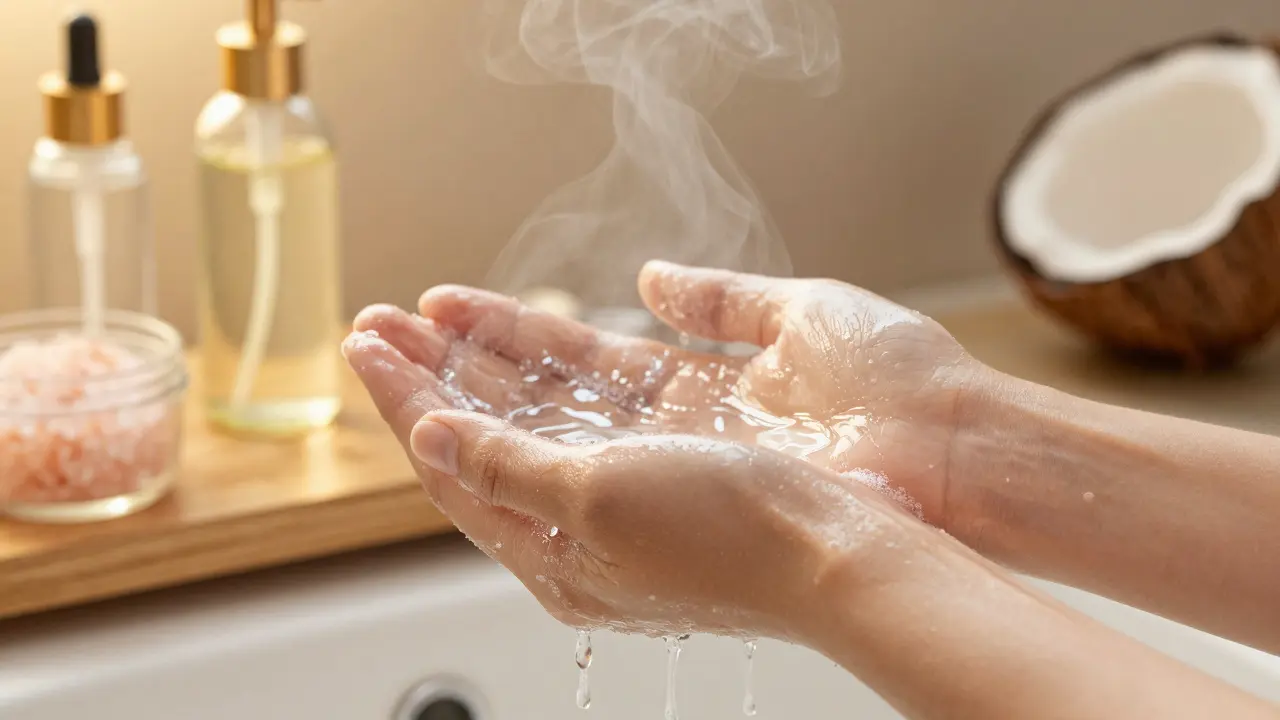
- Salt scrubs (like sea salt or Himalayan pink salt): Great for tough skin, detoxifying. Best for legs and feet.
- Sugar scrubs (brown or white sugar): Gentler, more moisturizing. Sugar dissolves slightly in water, so it’s less abrasive. Perfect for arms and torso.
- Ground coffee scrubs: Stimulates circulation, reduces cellulite appearance. Works well on thighs and butt.
- Enzyme scrubs (with papaya or pineapple): Chemical exfoliants. These are fine to use after bathing if you’re sensitive to physical scrubs, but they’re not the same thing.
Stick with physical scrubs (salt, sugar, coffee) for daily or every-other-day use. Enzyme scrubs? Save those for once a week.
What to Avoid
Even if you scrub before bathing, you can still mess it up:
- Don’t scrub every day. Twice a week is enough for most skin types. Over-exfoliating causes redness, dryness, and breaks in the skin barrier.
- Don’t use harsh scrubs on your face. Your face skin is thinner. Use a facial exfoliant designed for that area.
- Don’t scrub broken skin. Cuts, sunburns, rashes-skip it. Let your skin heal first.
- Don’t use the same scrub for body and face. Facial skin needs finer particles and gentler formulas.
Scrub Before vs. After: Quick Comparison
| Factor | Scrub Before Bathing | Scrub After Bathing |
|---|---|---|
| Exfoliation Effectiveness | High-dead cells are dry and easy to remove | Low-skin is swollen, cells are softened |
| Product Absorption After | Maximized-clean skin absorbs lotions better | Reduced-scrub residue blocks absorption |
| Skin Irritation Risk | Low-gentler on sensitive skin | High-hot water strips oils, scrub adds friction |
| Water Waste | Less-scrub rinses off cleanly | More-scrub gets washed away before working |
| Long-Term Skin Texture | Smooth, even, glowing | Flat, dull, uneven |
Frequently Asked Questions
Can I use a scrub in the bath instead of the shower?
Yes, but only if you scrub before getting in the water. Pour your scrub onto dry skin while standing outside the tub, massage it in, then step into the bath to rinse and soak. Don’t add scrub to bathwater-it’ll just float around and won’t work.
Should I moisturize right after scrubbing?
Absolutely. After rinsing off the scrub, pat your skin dry-not rub-and apply lotion or oil while your skin is still slightly damp. This locks in moisture and keeps your skin soft for hours.
Is it okay to scrub if I have acne-prone skin?
Be careful. Physical scrubs can irritate active breakouts. If you have acne, stick to gentle chemical exfoliants like salicylic acid or lactic acid. If you do use a scrub, choose a fine-grained sugar scrub and limit it to once a week.
How long should I scrub for?
Two to three minutes is plenty. You don’t need to scrub for ten minutes to see results. In fact, scrubbing too long can cause micro-tears and inflammation. Focus on areas that need it-elbows, knees, heels-and move quickly over smoother areas.
Can I use a body scrub on my lips?
No. Lips are too delicate. Use a lip-specific exfoliant or a soft toothbrush with a tiny bit of honey. Body scrubs are too rough and can cause chapping or bleeding.
Final Thought: It’s Not About Timing-It’s About Order
You don’t need expensive tools or fancy routines. You just need to do things in the right sequence. Scrub before you bathe. That’s it. Everything else-moisturizing, massaging, soaking-follows naturally.
Your skin doesn’t need more products. It needs better habits. And this one habit-scrubbing before the water hits-makes all the difference. Try it for two weeks. Feel the change. Then ask yourself: why did I wait so long to do this right?







December 1, 2025 AT 12:03
I used to scrub after showering because it felt nice, but after trying this method, my skin has never been smoother. Seriously, the difference is insane. No more flaky elbows, and my lotion actually sticks now instead of sliding off like a greasy pan.
Try it for two weeks-you’ll wonder why no one told you sooner.