
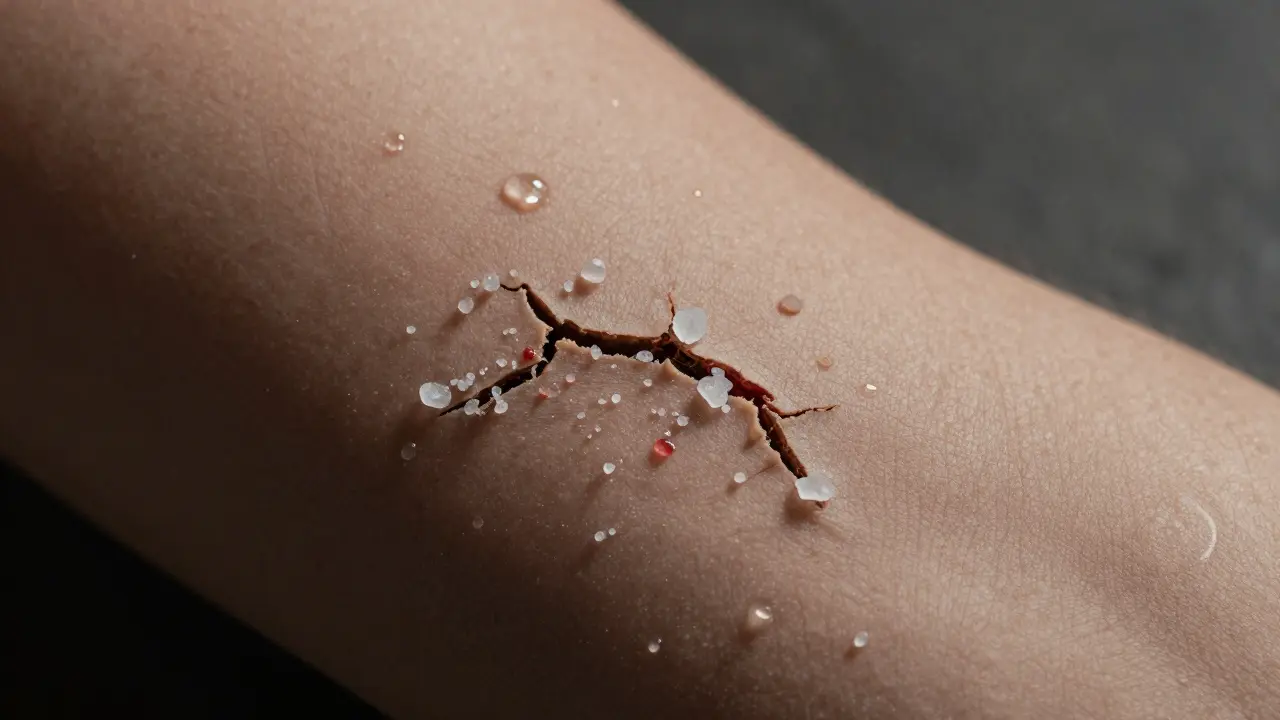
You’ve seen them everywhere-salt scrubs in fancy jars at the spa, Instagram influencers raving about their glowing skin, and online shops selling them as miracle workers. But here’s the truth no one tells you: salt scrubs aren’t for everyone. And if you’re using them wrong, you might be doing more harm than good.
What You’re Really Getting Into
Salt scrubs are made of coarse salt crystals-usually sea salt or Epsom salt-mixed with oils, fragrances, and sometimes sugar or herbs. They’re designed to slough off dead skin cells. Sounds simple, right? But the rough texture that makes them effective also makes them risky. Unlike sugar scrubs, which dissolve slightly as you rub, salt grains stay sharp. They don’t soften. And that’s where problems start.
Think of your skin like a fence. Salt scrubs don’t just clean the fence-they scrape off chunks of wood. If your fence is already weathered, cracked, or thin, you’re not fixing it. You’re breaking it.
The Hidden Downsides Most People Miss
Let’s be real: salt scrubs feel amazing in the moment. Your skin tingles. It smells like the ocean. You walk out feeling like you’ve just had a spa day. But the glow? It’s temporary. And the damage? It builds up.
- Micro-tears in your skin-Salt grains are jagged. Even if you’re gentle, they create tiny cuts you can’t see. These heal, but they leave behind weakened skin. Over time, that means more redness, sensitivity, and even broken capillaries.
- Stripping natural oils-Salt is a natural dehydrator. When you scrub with it, you don’t just remove dead skin-you pull moisture right out of living layers. Your skin responds by overproducing oil, leading to breakouts or dry patches that feel worse than before.
- Worsening eczema, psoriasis, or rosacea-If you have any of these conditions, salt scrubs are like pouring vinegar on a wound. The irritation triggers flare-ups. Dermatologists in Dubai see this all the time: patients come in after trying a viral scrub trend, and their skin is inflamed, flaky, and burning.
- Not safe on freshly shaved or sunburned skin-You wouldn’t rub sand on a fresh cut. Salt is no different. Shaving leaves your skin vulnerable. Sunburned skin is already damaged. Adding salt? You’re asking for pain, infection, or long-term discoloration.
- Can clog pores if not rinsed well-Salt doesn’t dissolve easily. Leftover grains can get trapped in pores, especially around the knees, elbows, or back. That’s how you get bumps that look like acne but aren’t.
Who Should Avoid Salt Scrubs Altogether?
Not everyone should skip them-but some people absolutely should.
- People with sensitive skin-If your skin stings when you use regular soap, salt scrubs are a hard no.
- Anyone with open wounds, cuts, or recent tattoos-Salt stings. A lot. And it can delay healing or cause scarring.
- Those with dry, flaky skin-You don’t need more exfoliation. You need hydration. Salt scrubs will make dryness worse.
- People with darker skin tones-Harsh scrubs can cause post-inflammatory hyperpigmentation. That dark spot you get after a pimple? Salt scrubs can make those spots permanent.
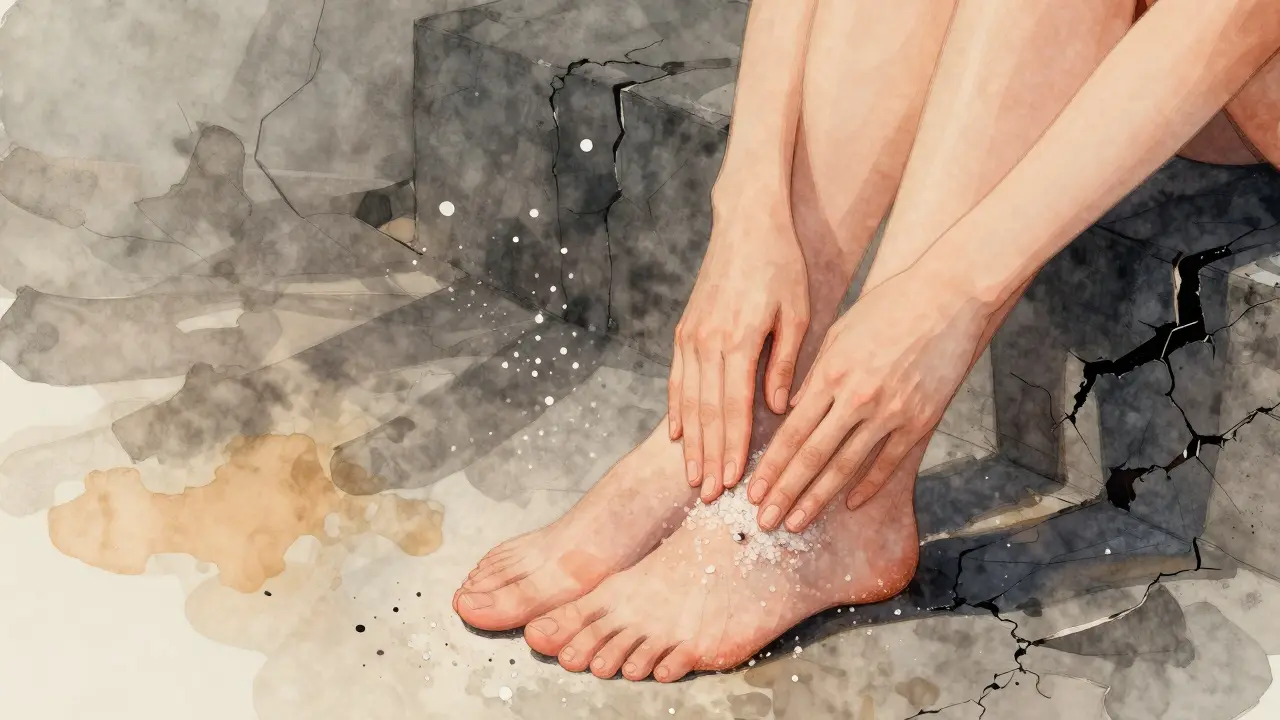
Salt Scrubs vs. Sugar Scrubs: The Real Difference
Why do sugar scrubs get praised while salt scrubs get blamed? It’s all about texture.
| Feature | Salt Scrub | Sugar Scrub |
|---|---|---|
| Grain Texture | Sharp, angular, abrasive | Round, softer, dissolves slightly |
| Best For | Thick, calloused skin (heels, elbows) | Face, arms, legs, sensitive areas |
| Hydration Level | Can dry out skin | Often contains humectants like honey |
| Risk of Micro-Tears | High | Low to moderate |
| Frequency Safe | Once a week max | 2-3 times a week |
If you’re looking for gentle exfoliation, sugar scrubs are the smarter pick. They’re less aggressive, hydrating, and far less likely to cause irritation. Salt scrubs? Save them for your feet-once a month.
How to Use Salt Scrubs Without Damaging Your Skin
Still want to try one? Here’s how to do it safely.
- Use it only on thick skin-Feet, knees, elbows. Never on your face, chest, or inner arms.
- Apply on damp skin-Never on dry skin. Wet skin reduces friction and lets the salt glide instead of dig in.
- Use light pressure-Rub like you’re massaging butter into bread, not scrubbing a pan.
- Rinse thoroughly-Leftover salt crystals are the #1 cause of clogged pores and irritation.
- Follow with moisturizer-Immediately after, apply a rich cream or oil. Your skin will thank you.
- Limit to once a week-More than that? You’re asking for trouble.
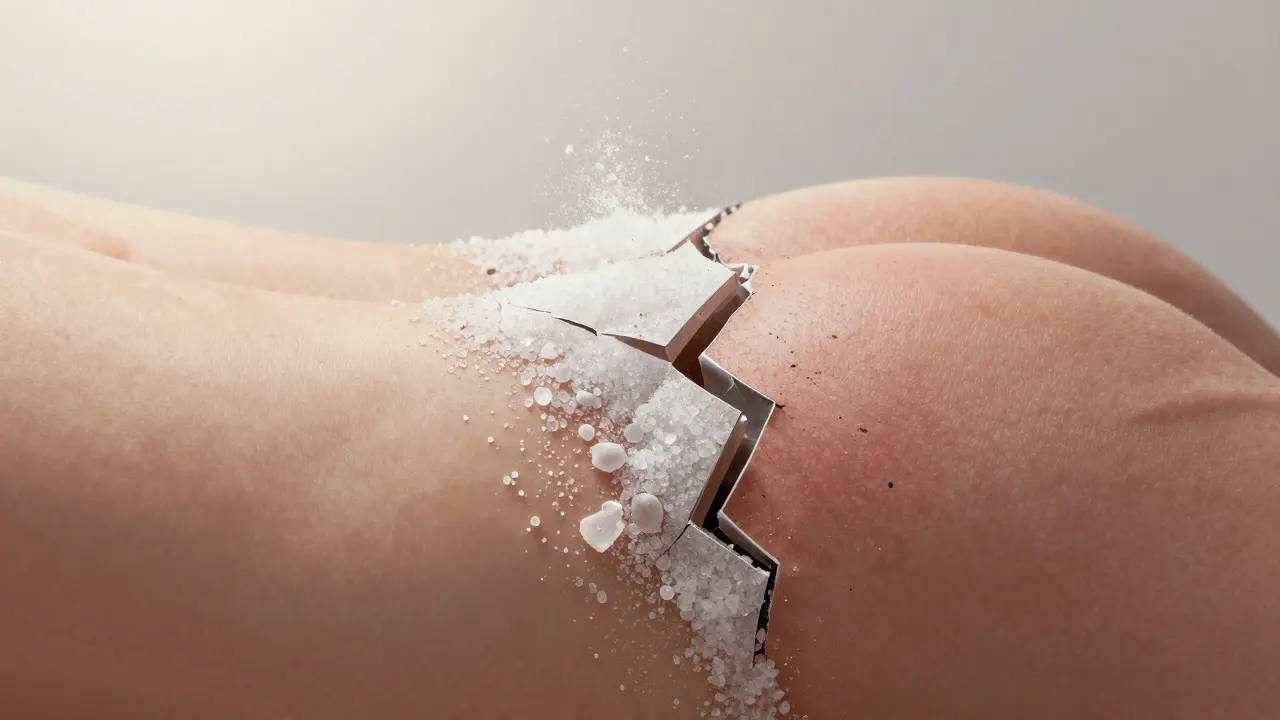
What Happens If You Overdo It?
I’ve seen clients come in with red, raw patches after using salt scrubs daily for weeks. One woman thought she was “detoxing” her skin. Instead, she developed chronic irritation that took three months to heal. Another man used it on his back after shaving-ended up with an infection that needed antibiotics.
It’s not dramatic. It’s not rare. It’s just ignored.
Overuse leads to:
- Chronic redness
- Thinning skin
- Increased sensitivity to sun and products
- Breakouts from trapped salt and bacteria
- Long-term dark spots
Your skin doesn’t need to be scraped raw to be healthy. It needs balance.
Alternatives That Actually Work
Want glowing skin without the risk? Try these instead:
- Chemical exfoliants-Glycolic acid, lactic acid, or salicylic acid in low doses. They dissolve dead skin without scratching. Safer. More effective.
- Soft washcloths or konjac sponges-Gentle physical exfoliation. Great for daily use.
- Enzyme masks-Papaya or pineapple enzymes break down dead cells naturally. No scrubbing needed.
- Hydrating body oils-Massage with jojoba or almond oil. They naturally slough off flakes while nourishing.
These options don’t leave your skin raw. They don’t cause micro-tears. They work with your skin, not against it.
Final Thought: Glow Isn’t About Scrubbing Harder
The beauty industry sells you the idea that more scrubbing = better results. But that’s a lie. Real glow comes from hydration, protection, and gentle renewal-not abrasion.
Salt scrubs have their place. But only if you treat them like a rare treat, not a daily ritual. And if your skin feels tight, red, or irritated after using one? Stop. Listen to your skin. It’s telling you something.
Your skin isn’t a surface to be polished. It’s a living barrier. Treat it like one.
Are salt scrubs bad for your skin?
Salt scrubs aren’t inherently bad, but they’re risky if used too often or on sensitive skin. Their coarse texture can cause micro-tears, strip natural oils, and worsen conditions like eczema or rosacea. They’re best used sparingly-once a week-and only on thick, calloused areas like feet or elbows.
Can salt scrubs cause acne?
Yes. Leftover salt crystals can clog pores, especially on the back, chest, or arms. If you don’t rinse thoroughly, the salt traps bacteria and dead skin, leading to breakouts that look like acne but aren’t. This is common in people who use salt scrubs daily or on oily areas.
Is it safe to use salt scrubs on your face?
No. Facial skin is much thinner and more sensitive than the rest of your body. Salt grains are too abrasive and can cause micro-tears, redness, and long-term irritation. Even if a product claims to be "gentle facial salt scrub," it’s still not safe. Use chemical exfoliants or soft cloths instead.
What’s better: salt scrub or sugar scrub?
Sugar scrubs are generally better for most skin types. Sugar crystals are rounder and dissolve slightly during use, making them less abrasive. They’re safer for sensitive skin, arms, legs, and even the body. Salt scrubs are harsher and better suited only for thick skin like heels, and even then, only occasionally.
How often should you use a salt scrub?
Once a week at most-and only on areas with thick skin like feet, knees, or elbows. If your skin feels tight, red, or sensitive afterward, cut back to once every two weeks. Daily use can damage your skin’s protective barrier and lead to chronic irritation.
Do salt scrubs help with cellulite?
No. Salt scrubs may temporarily improve skin texture by increasing blood flow and removing dead cells, but they don’t reduce fat or break down cellulite. Any visible "improvement" is just a short-term plumping effect. There’s no scrub, cream, or massage that permanently removes cellulite.
Can salt scrubs cause sun sensitivity?
Yes. Over-exfoliating with salt removes the top protective layer of your skin, making it more vulnerable to UV damage. If you use salt scrubs and then go out in the sun without sunscreen, you’re at higher risk for sunburn and long-term pigmentation changes. Always wait 24 hours after scrubbing before sun exposure.







January 19, 2026 AT 03:11
Salt scrubs feel amazing until your skin starts screaming at you. I used one on my legs after shaving and ended up with red streaks that lasted weeks. Don't be that guy. Your skin isn't a grill.
Use sugar scrubs. Or better yet, skip the scrubbing entirely and just moisturize. Your future self will thank you.