
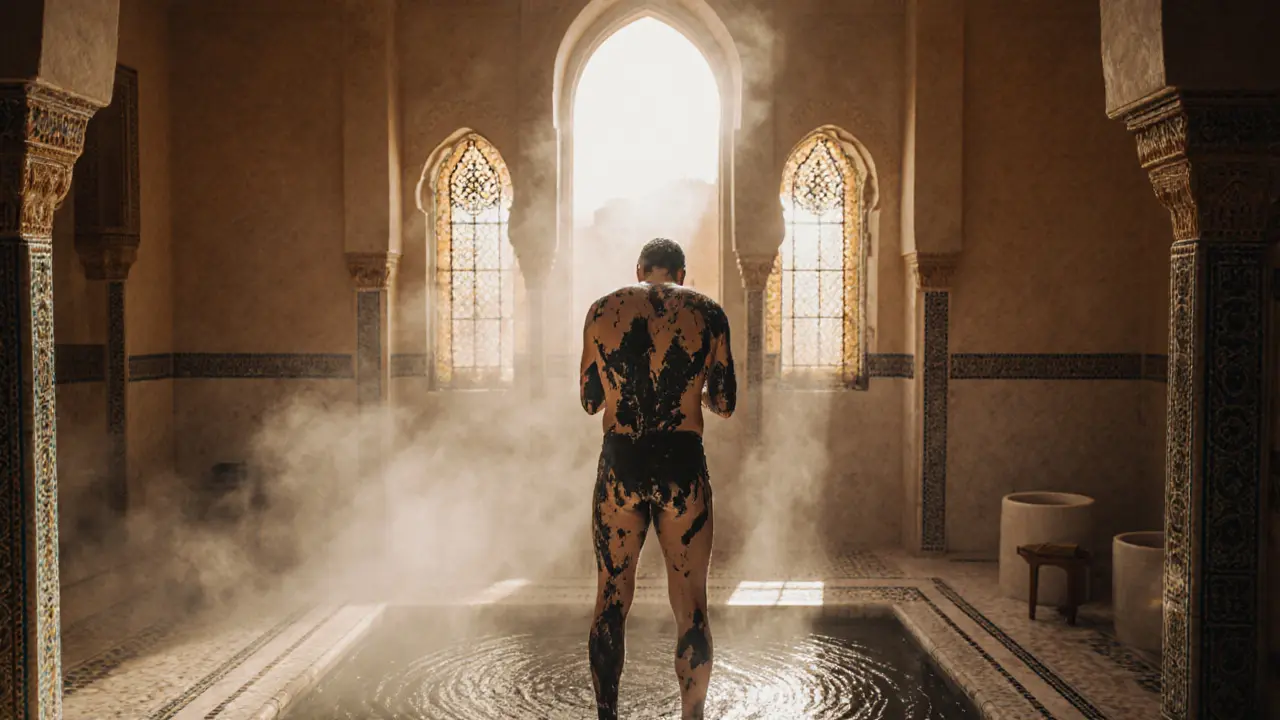
You’ve seen the photos-steam rising from a tiled room, someone covered in black soap, scrubbed raw by a gloved hand, glowing afterward like they just stepped out of a dream. If you’re wondering what Moroccan hammam really feels like, especially here in Dubai, you’re not alone. It’s not just a bath. It’s a ritual. A reset. A full-body conversation between you and centuries-old tradition.
Let’s cut through the Instagram filters. What actually happens inside one of these steam rooms? No fluff. No vague promises of "detox" or "renewal." Just the real, messy, wonderful sequence of events-from the moment you walk in to the moment you walk out, skin tingling, mind quiet.
The Setup: Not a Spa, But a Sacred Space
Don’t expect white linen towels and calming piano music. A traditional Moroccan hammam is more like a public bathhouse that’s been refined over a thousand years. In Dubai, you’ll find them in luxury resorts, boutique hotels, and even tucked into old Arabic neighborhoods like Al Fahidi. The room is all marble or ceramic tile, heated from below by a hypocaust system-same as ancient Romans used. No electricity. Just heat, steam, and water.
You’ll be handed a few basic things: a loofah (kessa), a bucket of warm water, and a block of black soap made from olive oil and crushed eucalyptus leaves. That’s it. No shampoo. No conditioner. No fancy oils. The simplicity is the point.
Step 1: Sweat It Out
You start by stripping down (yes, completely) and stepping into the hottest room. It’s not just warm-it’s thick. The air feels like a wet blanket wrapped around your skin. You stand there. Breathe. Let your pores open. This isn’t a sauna where you’re supposed to endure. It’s a slow surrender. Most people stay here 10-15 minutes. Some stay longer. There’s no rush. The heat softens your skin, loosens dirt, and wakes up your circulation. You might feel lightheaded. That’s normal. Drink water if you’re offered it.
Step 2: The Black Soap Ritual
Now you move to the next room-slightly cooler, still steamy. You take the black soap and rub it all over your body. Not gently. You massage it in with firm, circular motions. It smells earthy, slightly medicinal. The soap doesn’t lather like regular soap. It turns into a thick, dark paste. That’s how you know it’s working. It pulls gunk out of your skin. You’ll see it clinging to your arms, your back, your feet. It looks gross. It feels amazing.
Pro tip: Don’t rinse it off yet. Let it sit for 5-10 minutes. That’s when the real magic happens. The soap draws out toxins, exfoliates dead skin, and tightens pores. Your skin will feel tight, almost prickly. That’s not irritation. That’s your body waking up.
Step 3: The Scrub Down
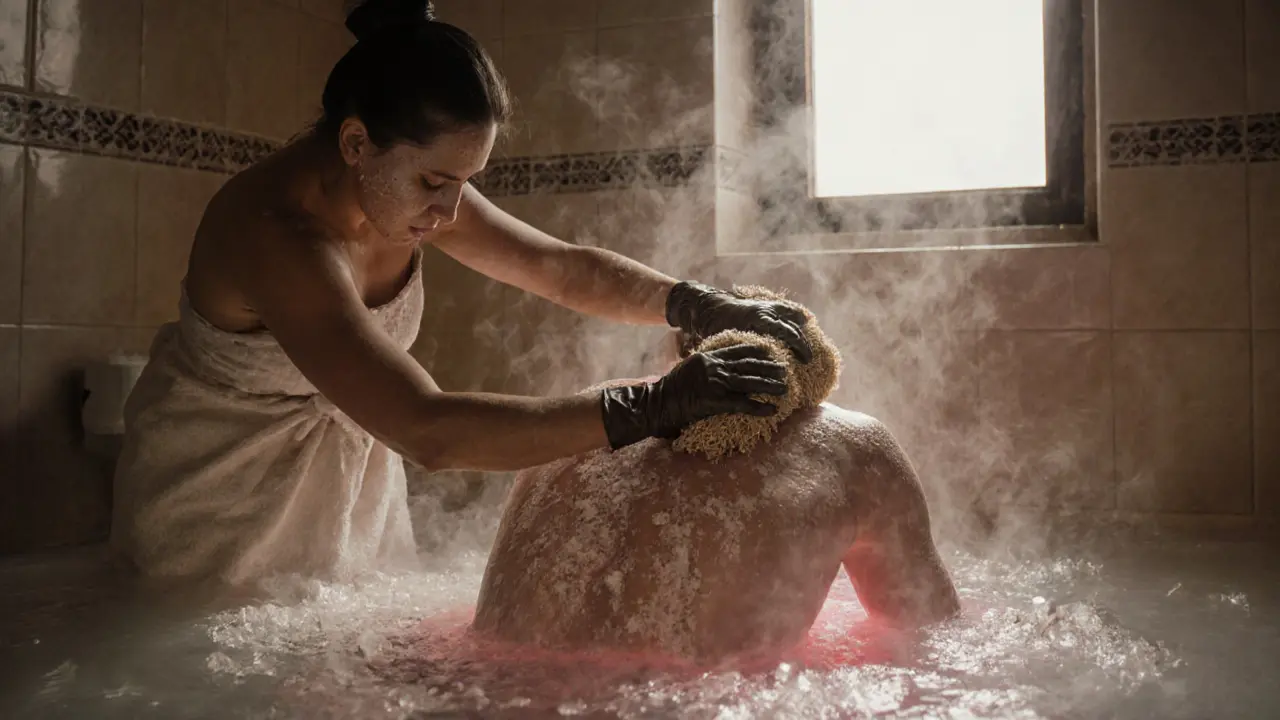
This is where most people panic. A woman (or sometimes a man, depending on the hammam) walks in wearing gloves and a towel. She doesn’t smile. She doesn’t chat. She just nods. Then she starts.
She grabs your arm. Not gently. She scrapes your skin with the kessa loofah. Hard. Fast. Back and forth. Your skin turns pink. You might yelp. You might laugh. You might cry. It hurts-but not in a bad way. It’s the kind of pain that feels like a deep tissue massage crossed with a full-body peel. She works your back, your legs, your arms, your feet. She scrubs until your skin is smooth and bright. You’ll see flakes of dead skin floating in the water. That’s your old self, washing away.
It’s intense. But here’s the secret: the better you let go, the better it feels. Fight it, and it’s torture. Relax, and it’s euphoric.
Step 4: The Rinse and Cool Down
After the scrub, she rinses you off with buckets of warm water. Then you move to the cool room. This is the best part. You lie on a marble slab, still dripping, while someone pours cool water over you. Sometimes they’ll massage your head. Sometimes they’ll just leave you alone. The contrast between hot and cold is shocking. Your heart races. Your skin tingles. You feel alive.
Step 5: The Glow
You get dressed. You walk outside. And suddenly, everything feels different. Your skin is baby-soft. Not just smooth-glowing. Like you’ve been polished from the inside. Your muscles are loose. Your mind is quiet. You don’t want to talk. You just want to sit in the sun and breathe.
That’s the hammam effect. It’s not about cleanliness. It’s about transformation.
Why It’s Different in Dubai
Dubai has turned the hammam into a luxury experience. You’ll find places with gold leaf tiles, rosewater mist, and post-session herbal tea. But the core ritual? Still the same. The best places keep the traditional steps-heat, soap, scrub, rinse-intact. The luxury just adds comfort: private rooms, better lighting, no waiting.
Some places offer extras: argan oil massage, henna tattoos, or mint tea with dates. But don’t confuse those with the hammam itself. The real deal? It’s the scrub. That’s the soul of it.
Where to Find the Real Deal in Dubai
Not all hammams are created equal. Here’s where to go:
- Al Bastakiya Hammam - Historic district. Authentic, no frills, local crowd. Best for the real experience.
- The Ritz-Carlton, Dubai - Private rooms, premium oils, full spa day. Perfect if you want luxury with tradition.
- Spa at Jumeirah Al Naseem - Beachfront. Great for couples. Includes a cold plunge pool.
- Al Manara Hammam - Family-run. No English spoken. Just pure ritual. Bring a friend.
Book ahead. Weekends fill up fast. Weekdays are quieter. Go early-before noon-for the most peaceful session.
What It Costs
Basic hammam: AED 120-180. Includes soap, scrub, towel, and water. No tips needed, but if you loved it? Leave AED 20-30. It’s appreciated.
Luxury package: AED 350-700. Includes massage, facial, tea, robe, and private room. Worth it if you’re treating yourself.
Pro tip: Skip the add-ons your first time. Just do the core ritual. You’ll understand why it’s worth it.
What to Bring (and What to Leave at Home)
- Bring: A towel (some places provide it), flip-flops, a change of clothes, and an open mind.
- Don’t bring: Expensive jewelry, your phone, or expectations of privacy. This isn’t a spa. It’s a communal experience.
And no-don’t wear a swimsuit. You’ll be scrubbed naked. It’s normal. Everyone is. The women’s side is always female staff. Men’s side, male staff. Respect the space.
Who Should Skip It
Not everyone should try this. Avoid it if you:
- Have open wounds or recent tattoos
- Are pregnant (especially in the first trimester)
- Have severe skin conditions like eczema or psoriasis
- Feel dizzy or faint easily in heat
If you’re unsure, ask the staff. They’ll tell you if it’s safe. They’ve seen it all.
Moroccan Hammam vs. Turkish Hamam in Dubai
| Feature | Moroccan Hammam | Turkish Hamam |
|---|---|---|
| Heat Level | Higher, more intense steam | Milder, more gradual |
| Soap Used | Black soap (olive oil, eucalyptus) | White soap (scented, often floral) |
| Scrub Tool | Kessa loofah (rough, abrasive) | Soft mitt or sponge |
| Scrub Intensity | Aggressive, deep exfoliation | Gentle, more soothing |
| Aftercare | Minimal. Just rinse and rest | Often includes massage or oil application |
| Experience | Raw, ritualistic, transformative | Relaxing, elegant, spa-like |
If you want to feel reborn, go Moroccan. If you want to unwind, go Turkish.
Frequently Asked Questions
Is a Moroccan hammam painful?
It can be, but not in a bad way. The scrubbing feels like a deep peel-intense, even a little shocking. But most people say the discomfort fades quickly, and the glow afterward makes it worth it. If you’re sensitive, tell the attendant to go lighter. They’ll adjust.
How often should I do a Moroccan hammam?
Once a month is ideal for most people. It’s a deep cleanse, not a daily habit. Overdoing it can dry out your skin or irritate it. If you have sensitive skin, try every six weeks. Athletes or people in hot climates like Dubai might go every two weeks.
Do I need to speak Arabic to get a hammam in Dubai?
No. Most places in Dubai, especially the ones catering to tourists, have staff who speak English. But in traditional spots like Al Bastakiya, staff might not. A simple smile and pointing work fine. The ritual is universal-you don’t need words.
Can I go alone to a hammam in Dubai?
Absolutely. Many women come alone. It’s a common practice. You’ll be in a private or gender-segregated room. No one will judge you. In fact, most people are too focused on their own experience to notice you.
Will my skin break out after a hammam?
Some people get a temporary breakout. That’s your skin purging toxins. It usually clears up in 1-2 days. Drink water, avoid heavy makeup, and don’t scrub again for a week. After that, your skin will look clearer than ever.
Ready to Try It?
You don’t need to be a spa regular. You don’t need to know Arabic. You don’t even need to like steam rooms. If you’ve ever wanted to feel like your skin was truly cleaned-not just washed, but renewed-this is your chance. The hammam doesn’t care who you are. It just asks you to show up. And then, it transforms you.
Book your session. Go in naked. Let go. And see what happens when you let a 1,000-year-old ritual scrub away more than just dirt.





November 10, 2025 AT 04:34
The way you described the black soap ritual made me want to book a session tomorrow. There’s something profoundly grounding about stripping down-not just physically, but mentally-and letting a centuries-old practice remind you that simplicity can be transformative.