
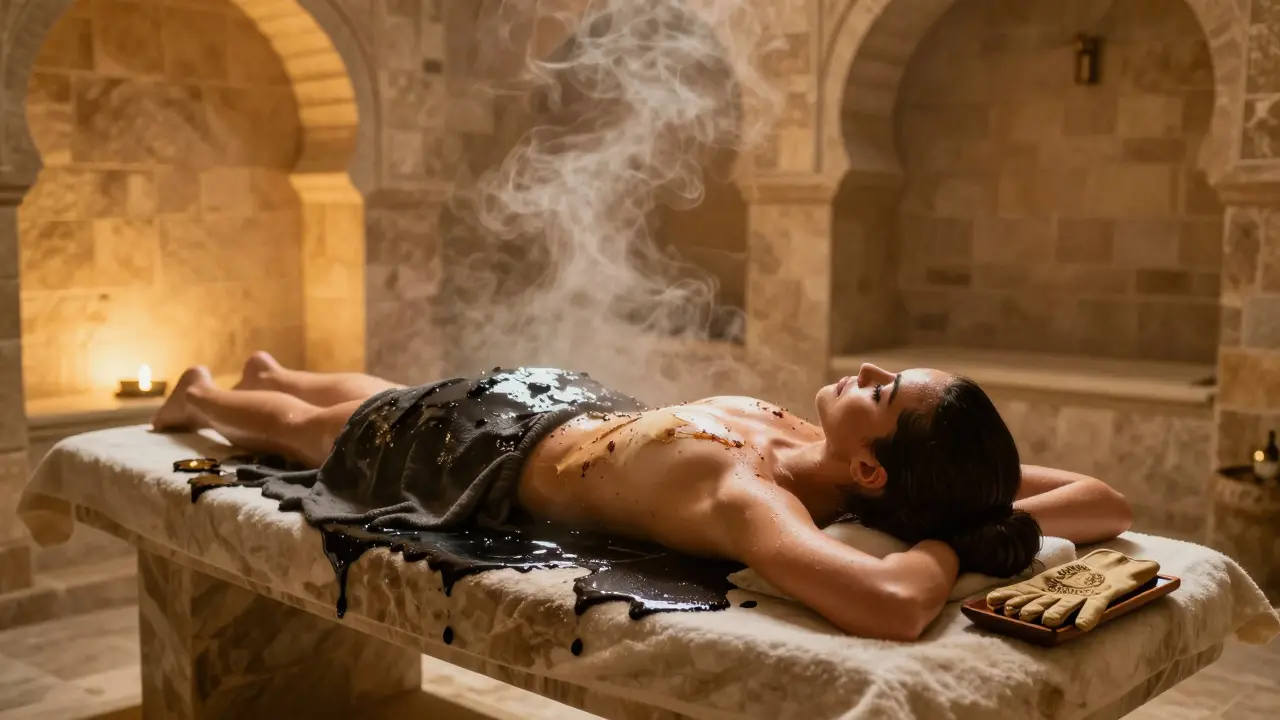
You’ve seen the photos: steam rising from stone rooms, people covered in black soap, scrubbed raw by rough mitts. You’ve heard the whispers: "It hurts," "It’s brutal," "I cried the first time." So the question lingers: Is hammam painful? The short answer? Not if you know what to expect.
Let’s cut through the myths. A traditional Moroccan hammam in Dubai isn’t a torture chamber. It’s not meant to leave you bruised or screaming. It’s a ritual - one that’s been practiced for over a thousand years across North Africa and the Middle East. And yes, it can feel intense. But intensity isn’t the same as pain.
What Exactly Is a Hammam?
A hammam - also called a Moroccan bath - is a steam bath rooted in Islamic and Roman bathing traditions. In Dubai, you’ll find both luxury spa versions and authentic, no-frills public baths. The process usually goes like this: you enter a hot room, sweat it out, get slathered in black soap (made from olive oil and eucalyptus), then get scrubbed down with a kessa glove - a rough, loofah-like mitt - to remove dead skin. Finally, you rinse off, sometimes with cold water, then relax in a cool room.
It’s not just about cleanliness. It’s about renewal. People come here to detox, de-stress, and reset. Many locals in Dubai swear by it after long workdays or weekend parties. Tourists often leave saying, "I didn’t know I needed this."
Why People Think Hammam Is Painful
The fear usually comes from two things: the scrub and the heat.
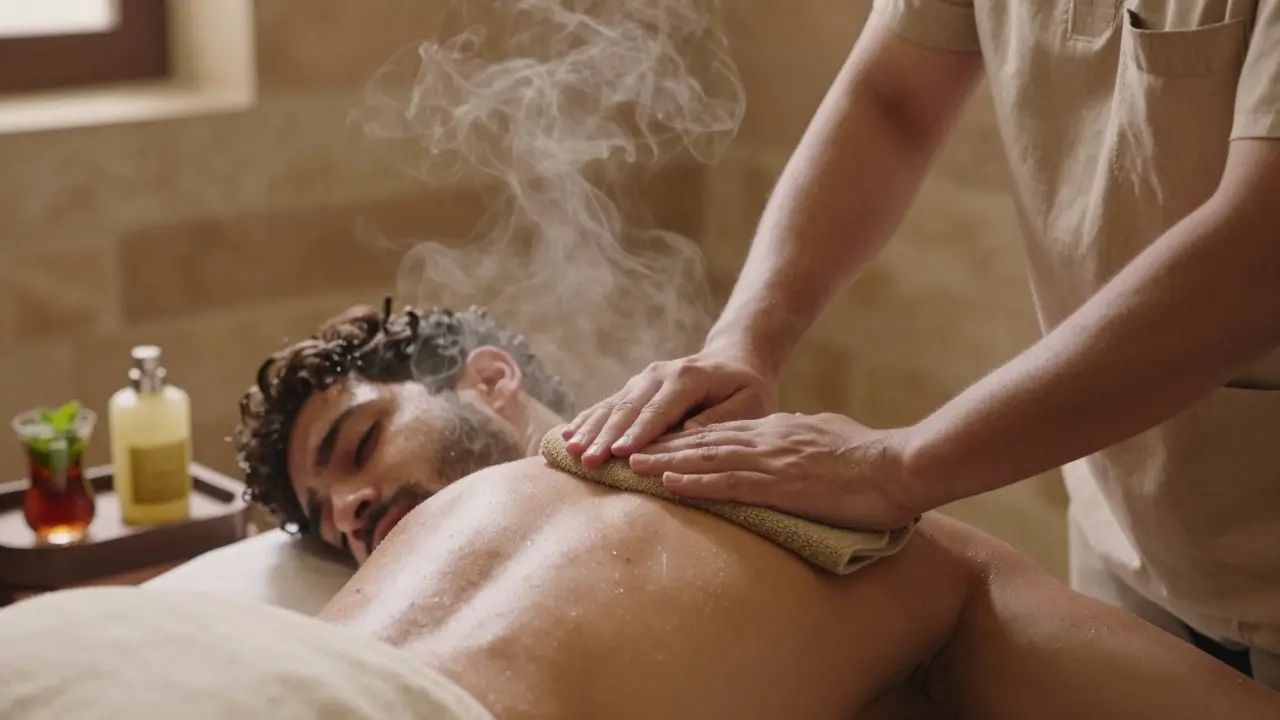
First, the kessa glove. It’s coarse. It’s not a soft washcloth. When used properly, it feels like a deep exfoliation - firm, sometimes prickly, but not sharp. Think of it like sanding wood: you feel the grit, but you don’t get cut. If you’re told to "scrub harder," and the attendant goes full bulldozer, that’s where discomfort kicks in. But that’s not normal. A skilled therapist adjusts pressure based on your skin. You should feel tingling, not tearing.
Second, the heat. Hammam rooms can hit 45°C (113°F) with 100% humidity. That’s like walking into a sauna full of wet towels. If you’re not used to it, you might feel lightheaded. That’s not pain - it’s your body adjusting. Most places let you take breaks. You can sit on a cooler bench, sip mint tea, or step out for a minute. No one’s forcing you to stay.
Real pain? That comes from bad service - an overzealous attendant, a dirty glove, or a rushed session. That’s rare in Dubai’s top hammams. But it happens in cheaper spots. Choose wisely.
What You’ll Actually Feel During a Hammam
Let’s break it down step by step:
- Hot room (15-20 mins): You’ll sweat. A lot. Your skin will feel tight. Your breathing might get heavy. That’s normal. This phase opens your pores and loosens dirt.
- Black soap application: Warm, slippery, earthy-smelling. It feels soothing, not shocking. Some people find the scent strong - but it’s natural, not chemical.
- Scrubbing (5-10 mins): This is the moment people panic. The mitt glides over your back, arms, legs. You’ll feel grit coming off. It’s like a full-body peel. You might feel a little sting on dry patches - elbows, heels, shoulders. That’s just dead skin releasing. If it stings too much, say "dans la douceur" (in French) or "slower" in English. They’ll adjust.
- Rinse: Cold water hits your hot skin. It’s a shock - but in a good way. Like diving into a pool after a sauna.
- Relaxation: You’ll lie on a heated stone, wrapped in a towel, sipping mint tea. Your muscles melt. Your mind clears. This part? Pure bliss.
Most people describe the scrub as "uncomfortable at first, then oddly satisfying." Like a deep tissue massage that leaves your skin glowing.
Types of Hammam Experiences in Dubai
Dubai offers two main styles:
- Traditional Public Hammam: Found in older neighborhoods like Al Fahidi or Bur Dubai. Simple, no-frills, mostly local clients. Prices start at 50 AED. The vibe is no-nonsense. Attendants are experienced but won’t coddle you. Great if you want authenticity.
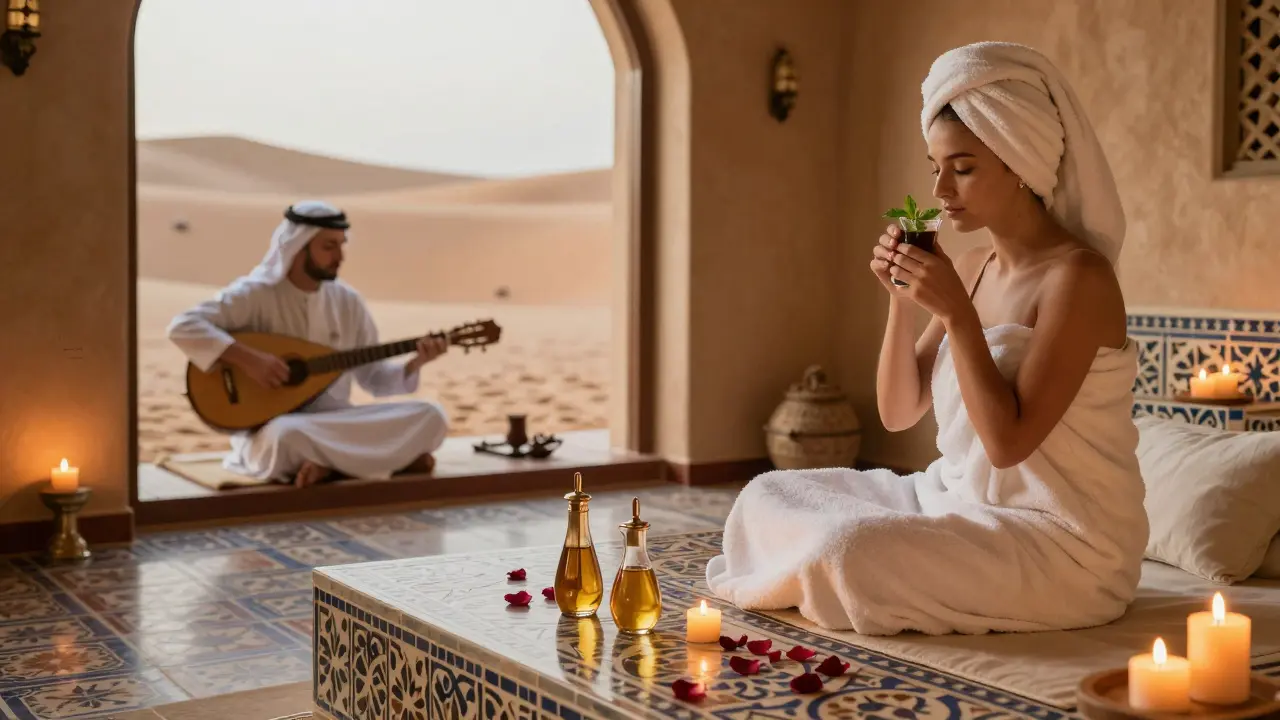
- Luxury Spa Hammam: At places like Spa at Armani a high-end wellness destination in Burj Khalifa, The Ritz-Carlton offers hammam rituals with aromatherapy and gold-infused oils, or Al Maha a desert resort offering private hammam suites with candlelight and oud music. These include extras: massage, herbal wraps, rosewater spritzes. Prices range from 300-800 AED. Ideal if you want pampering.
Neither is more "painful" than the other. The difference is in the pace, privacy, and extras.
How to Find a Good Hammam in Dubai
Don’t just pick the first one on Google Maps. Here’s how to avoid bad experiences:
- Look for places with clear photos of their steam rooms - clean tiles, no mold.
- Check reviews for phrases like "too aggressive" or "scrubbed too hard." Avoid those.
- Ask if they use disposable gloves. Reusable ones can harbor bacteria.
- Go during off-peak hours (10am-2pm on weekdays). Less rush = better attention.
- Book a private session if you’re nervous. You’ll get undivided care.
Top spots to consider: Al Maha Hammam in the desert, Spa Al Maha in Dubai Hills, and Burj Al Arab Hammam for luxury.
What to Expect During a Session
Arrive 20 minutes early. Bring a towel, flip-flops, and a change of clothes. Most places rent towels and robes for 20 AED. You’ll be given a private changing room. No nudity in public areas - you’ll wear a disposable undergarment or bikini.
The attendant will guide you through each step. They’ll ask if you want extra scrubbing or a massage. Say yes to the massage if you’re new - it helps you relax before the scrub. Don’t be shy to speak up: "Too hot," "Too rough," "I need a break."
Afterward, you’ll feel light. Your skin will be baby-soft. You might feel a bit dizzy from the heat - drink water. Rest for 15 minutes. That’s part of the ritual.
Pricing and Booking
Here’s what you’ll pay in 2026:
| Experience Type | Price (AED) | Duration | Best For |
|---|---|---|---|
| Public Hammam | 50-80 | 45 mins | Authenticity, budget travelers |
| Standard Spa Hammam | 200-350 | 75 mins | First-timers, couples |
| Luxury Hammam + Massage | 500-800 | 120 mins | Special occasions, luxury seekers |
Booking online is easy. Most places let you book via WhatsApp or their website. Always confirm what’s included - some charge extra for soap, tea, or robe rental.
Safety Tips
Here’s how to avoid problems:
- Don’t go on an empty stomach. Eat something light 1-2 hours before. You’ll feel better.
- Hydrate. Drink water before, during, and after. Dehydration makes heat feel worse.
- Don’t scrub yourself. Let the attendant do it. You’ll miss spots and overdo it.
- Watch for infections. If the room looks damp or moldy, leave. Cleanliness matters.
- Skip it if you’re pregnant, have open wounds, or heart issues. Always check with your doctor first.
Comparison: Hammam vs. Turkish Bath in Dubai
| Feature | Hammam (Moroccan) | Turkish Bath |
|---|---|---|
| Heat Level | Hot and humid (45°C) | Milder (38-40°C) |
| Scrubbing Tool | Kessa glove (rough, natural fiber) | Soft sponge or loofah |
| Soap Used | Black soap (olive oil, eucalyptus) | White soap (often scented, milder) |
| Pressure | Firmer, deeper exfoliation | Gentler, more relaxing |
| Aftercare | Often includes mint tea, quiet rest | Usually includes massage or aromatherapy |
| Best For | Deep detox, skin renewal | Relaxation, light cleansing |
Both are great. But if you want real skin transformation, go for the hammam. If you just want to chill, Turkish is gentler.
Frequently Asked Questions
Is a hammam painful for first-timers?
Not if you choose a reputable place. Most first-timers feel a bit of pressure during the scrub - like a deep exfoliation - but it’s not sharp or lasting. If it hurts, speak up. Good attendants adjust immediately. Many say the discomfort fades into a satisfying tingle.
How often should I do a hammam?
Once a month is ideal for most people. Doing it weekly can strip your skin too much. If you have sensitive skin, try every 6 weeks. Athletes or people in hot climates (like Dubai) often do it every 2-3 weeks.
Can I do a hammam if I have acne or eczema?
Yes - but with caution. The steam opens pores and can help clear acne. But if you have active eczema, open sores, or sunburn, skip it. The heat and scrubbing can irritate inflamed skin. Always tell your therapist about skin conditions before starting.
Do I need to shave before a hammam?
No, but it helps. Hair can get caught in the kessa glove and make scrubbing less effective. If you’re getting a full-body scrub, shaving the day before makes the experience smoother. It’s not required, just helpful.
Why does my skin feel so soft after a hammam?
Because you’re removing dead skin cells that build up over weeks. The black soap breaks down dirt and oil, and the kessa glove lifts it all away. What’s left is fresh, new skin - naturally glowing. No chemicals, no lasers. Just centuries-old science.
So, is hammam painful? Not if you go with the right expectations - and the right place. It’s intense, yes. But in the best way possible. Think of it like a workout for your skin: it challenges you, but leaves you stronger. Ready to feel like a new person? Book your session. Your skin will thank you.






February 11, 2026 AT 02:50
I went to the hammam at Al Maha last month and honestly? It was one of the best things I’ve ever done for my skin. I was nervous about the scrub - I thought it’d be brutal - but the attendant checked in every few minutes like, "Still okay?" and adjusted pressure like a pro. Felt like a deep cleanse but not painful at all. Left feeling lighter, literally. My legs haven’t been this smooth since I was a kid.
Also, the mint tea afterward? Pure magic. I sat there for 20 minutes just breathing. No phone. No noise. Just steam and stillness. If you’re on the fence, go. You’ll thank yourself.