
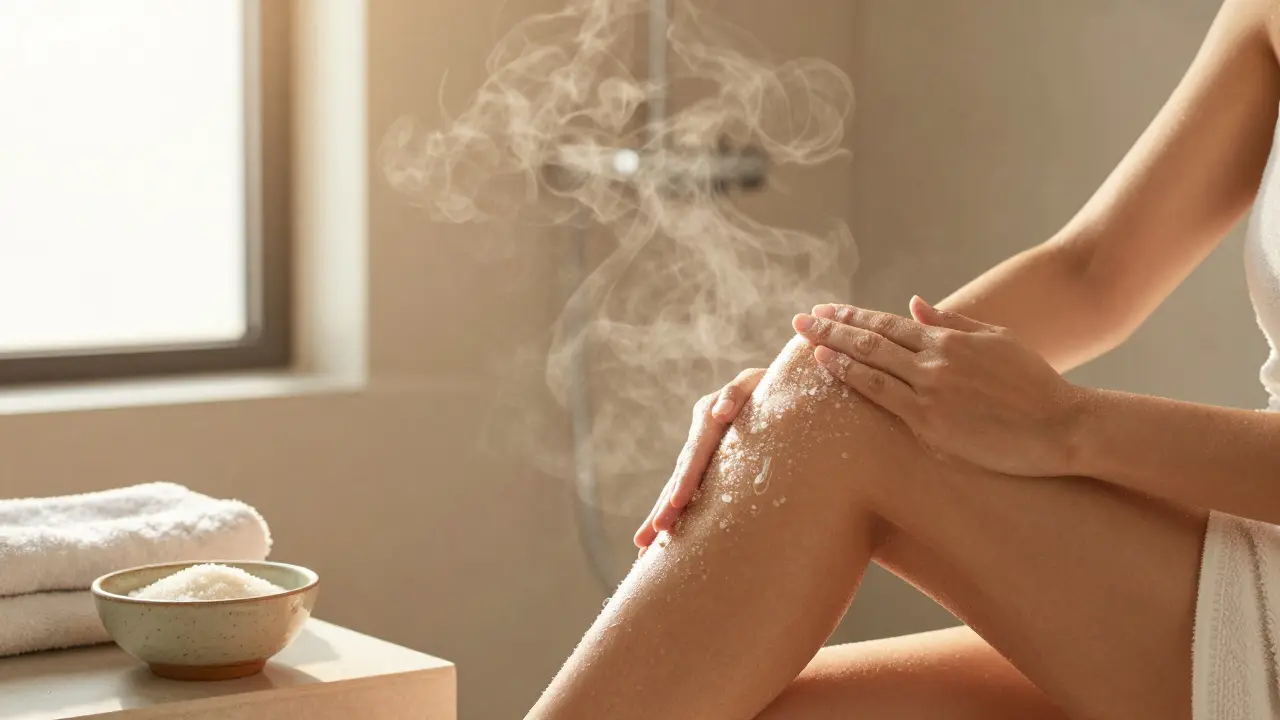
You’ve probably seen those glowing skin posts on Instagram and wondered: how to exfoliate properly without ending up red, raw, or worse-breakouts. The truth? Most people are doing it wrong. Too much. Too hard. Too often. And it’s ruining their skin instead of helping it.
Exfoliation isn’t about scrubbing until your skin stings. It’s about gently removing the dead cells that clog pores, dull your glow, and make lotions slide right off. Do it right, and your skin feels smoother, absorbs moisture better, and looks healthier-no filters needed.
What Exfoliation Actually Does
Your skin renews itself every 28 to 40 days. Old cells pile up on the surface, making your complexion look dull, rough, or patchy. That’s where exfoliation comes in. It’s not magic. It’s physics. You’re removing the layer of dead skin so new, fresh skin can show through.
But here’s the thing: your skin isn’t a car you can sand down. It’s delicate. Overdo it, and you strip away your natural barrier. That’s when you get dryness, irritation, or even breakouts. Underdo it, and nothing changes. The sweet spot? Once or twice a week, depending on your skin type.
Why Proper Exfoliation Matters
Think of your skin like a garden. If you never pull the weeds, the flowers can’t grow. Dead skin cells are those weeds. When they build up:
- Moisturizers sit on top instead of soaking in
- Pores get clogged, leading to bumps or blackheads
- Body lotion feels like it’s sliding off
- Your tan looks patchy or uneven
Proper exfoliation fixes all that. In Dubai’s dry, dusty climate, it’s even more important. Wind, AC, and sun leave skin extra rough. A weekly body scrub can make the difference between flaky legs and silky-smooth skin that feels amazing in shorts or swimsuits.
Two Main Types of Exfoliation
There are two ways to exfoliate: physical and chemical. Both work-but they’re not interchangeable.
Physical exfoliation means using something abrasive to scrub away dead cells. Think sugar scrubs, loofahs, brushes, or salt-based body scrubs. It’s tactile. You feel it. It’s great for thick skin on elbows, knees, and feet.
Chemical exfoliation uses acids like AHAs (glycolic, lactic) or BHAs (salicylic acid) to dissolve dead cells without scrubbing. These are better for sensitive skin, acne-prone areas, or if you want deeper renewal. You won’t feel grit. You’ll just notice smoother skin after a few uses.
Most people in Dubai lean toward physical scrubs because they’re easy to find and feel satisfying. But if your skin stings after use, or you get red patches, switch to chemical. You’ll thank yourself later.

How to Exfoliate Your Body Properly
Here’s the exact routine that works for most people:
- Start with wet skin. Shower first. Warm water opens pores and softens dead skin. Don’t scrub dry skin-it’ll tear.
- Use a gentle scrub. Avoid scrubs with jagged particles like walnut shells. They create micro-tears. Look for round granules like sugar, jojoba beads, or finely ground rice.
- Apply with light pressure. Use your fingers, not a loofah or brush, unless your skin is very thick. Glide the scrub in small circles. Focus on rough spots: elbows, knees, heels, and the backs of arms. Skip your chest and stomach unless your skin is very dry.
- Scrub for 60 seconds max. That’s it. You’re not trying to sand your skin. One minute is enough to lift dead cells.
- Rinse with cool water. Cold water closes pores and calms the skin. Don’t leave scrub residue-it can irritate.
- Pat dry, then moisturize. Within 3 minutes of showering, apply body oil or cream. This locks in moisture while your skin is still damp.
Do this once a week. If your skin feels tight or flaky after, cut back to every 10 days. If you’re using retinoids or acne treatments, stick to chemical exfoliants only-skip the scrub entirely.
What to Look for in a Body Scrub (Dubai Edition)
Not all scrubs are created equal. In Dubai’s heat, you need something that hydrates as it scrubs. Avoid these red flags:
- Alcohol as a top ingredient (dries skin)
- Microplastics (harmful to the environment and your skin)
- Strong artificial fragrances (can trigger sensitivity)
Look for these good signs:
- Sugar or salt as the main exfoliant
- Coconut oil, shea butter, or almond oil in the first five ingredients
- Natural scents like orange, mint, or lavender
- Free from parabens and sulfates
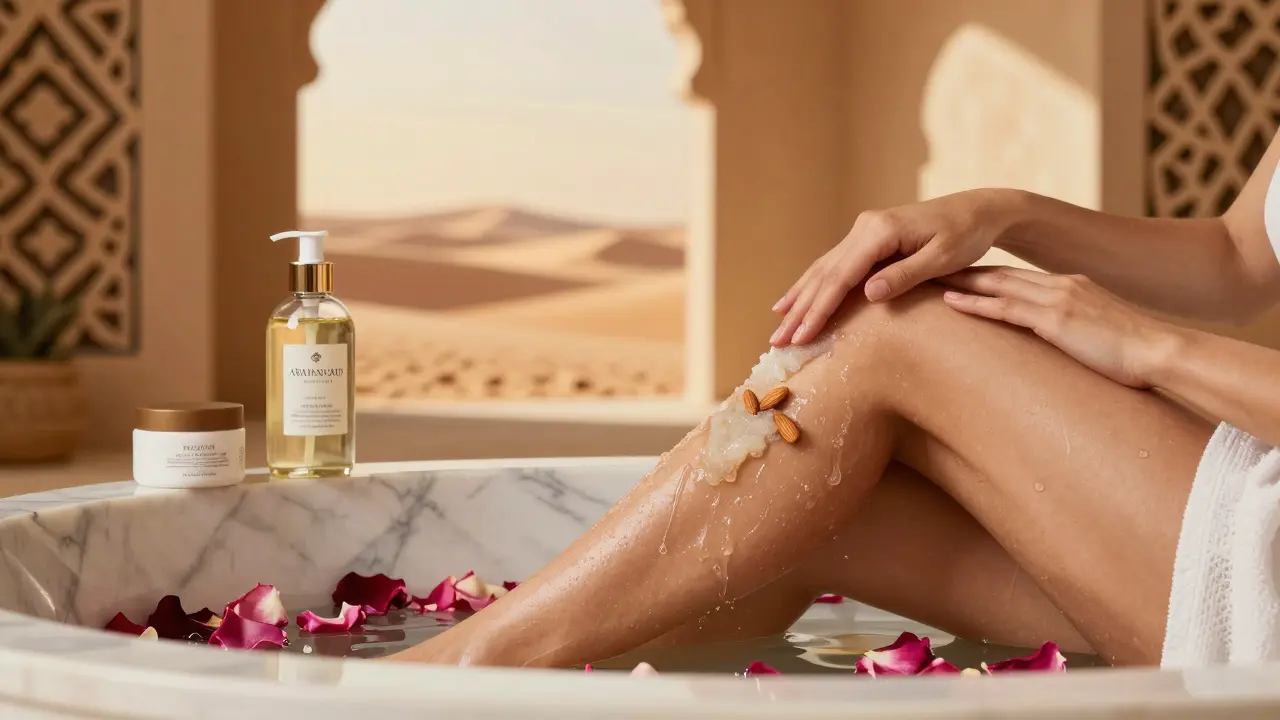
Popular local brands like Arabian Oud a luxury Middle Eastern skincare brand known for natural body scrubs with rose, amber, and oud, Al Fardan a Dubai-based brand offering hydrating scrubs with dates and camel milk, and even Lush a global brand with fresh, handmade scrubs sold in Dubai malls have great options. You can find them at Spinneys, Lulu Hypermarket, or online via Noon or Amazon.ae.
What to Avoid
Here’s what most people get wrong:
- Scrubbing every day. Your skin needs time to recover.
- Using a scrub on broken skin, sunburn, or rashes. You’ll make it worse.
- Scrubbing right after shaving. Wait 24 hours. Your skin is vulnerable.
- Skipping moisturizer afterward. Exfoliation removes a protective layer-you must replace it.
- Using kitchen sugar or coffee grounds straight from the jar. They’re too coarse and can harbor bacteria.
And don’t forget: exfoliation doesn’t replace sunscreen. If you’re using chemical exfoliants, your skin becomes more sun-sensitive. Always wear SPF on exposed areas.
Body Scrub vs. Dry Brushing: Which Is Better?
| Feature | Body Scrub | Dry Brushing |
|---|---|---|
| How it works | Removes dead skin with gentle abrasives | Stimulates circulation with bristles |
| Best for | Smooth texture, deep exfoliation | Detox, lymphatic flow, cellulite reduction |
| Frequency | 1-2 times per week | Every morning (before shower) |
| Aftercare needed | Yes-moisturize immediately | Yes-shower and hydrate |
| Best for sensitive skin? | Yes, if formula is gentle | No-can irritate |
| Where to buy in Dubai | Lulu, Spinneys, pharmacies, online | Amazon.ae, wellness stores, Decathlon |
Most people benefit from both. Dry brushing in the morning wakes up your skin. A weekly scrub deep-cleans. But if you only pick one, go with a gentle body scrub. It’s more effective for visible results.
Frequently Asked Questions
Can I use a body scrub on my face?
No. Facial skin is 10 times thinner than body skin. Body scrubs are too harsh and can cause micro-tears, redness, or breakouts. Use a facial exfoliant designed for the face-preferably with chemical exfoliants like lactic acid or enzymes. Even gentle sugar scrubs made for the face are safer than body ones.
How long until I see results from exfoliating?
You’ll notice softer skin after one use. For visible glow and smoother texture, it takes 2-3 weeks of consistent weekly exfoliation. If you’re trying to fade dark spots or rough patches, give it 4-6 weeks. Patience is key.
Is it okay to exfoliate if I have acne?
Yes-but carefully. Avoid physical scrubs on active breakouts. They spread bacteria and cause more inflammation. Instead, use a BHA (salicylic acid) toner or serum 2-3 times a week. It dissolves oil inside pores without scrubbing. If your skin is inflamed, skip exfoliation until it calms down.
What’s the best time of day to exfoliate?
Nighttime is ideal. Your skin repairs while you sleep. Exfoliating at night lets your moisturizer absorb better overnight. Plus, you’re not exposing freshly exfoliated skin to sun or pollution right away. If you prefer mornings, always follow with SPF on exposed areas.
Can I make my own body scrub at home?
Yes, and it’s easy. Mix 1 cup of fine sugar or sea salt with ½ cup of coconut oil or olive oil. Add 5-10 drops of lavender or orange essential oil if you like. Store in a sealed jar. Use within 2 weeks. Avoid using honey or yogurt-they spoil quickly and can cause irritation. Homemade scrubs are great for occasional use, but store-bought ones often have better preservatives and skin-soothing ingredients.
Final Tip: Less Is More
Exfoliation isn’t a race. You don’t need to scrub harder or longer to get better results. In fact, the opposite is true. Gentle, consistent care wins every time. If your skin feels tight, itchy, or looks red, you’re doing too much. Cut back. Listen to your skin. It’ll tell you what it needs.
Start with one gentle scrub a week. Add a moisturizer with ceramides or hyaluronic acid. Protect your skin from the sun. That’s it. No fancy routines. No expensive gadgets. Just smart, simple steps.
Smooth skin isn’t about perfection. It’s about feeling confident in your own skin-whether you’re wearing a swimsuit, a dress, or just lounging at home. And that? That’s worth the few extra minutes a week.







December 30, 2025 AT 02:17
I tried exfoliating every day like my buddy did and my skin looked like a lizard. Now I do it once a week and it’s fine. No need to overthink it.